
Texas Fence Blog

Best Wood Types for Texas Fences

Why Wood Choice Matters

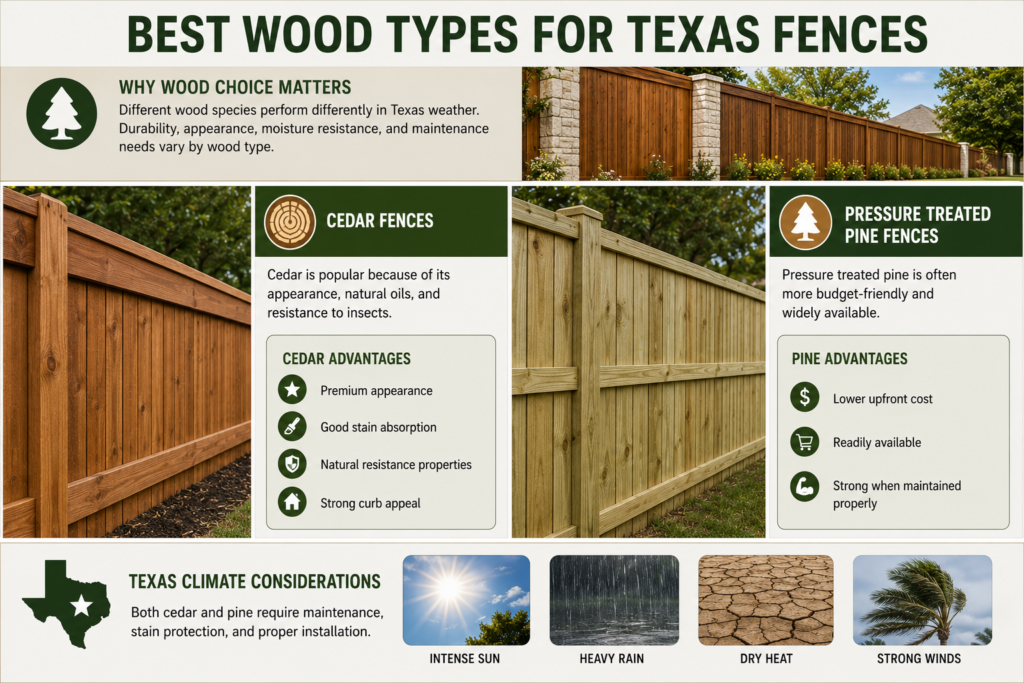
Different wood species perform differently in Texas weather. Durability, appearance, moisture resistance, and maintenance needs vary by wood type.

Cedar Fences

Cedar is popular because of its appearance, natural oils, and resistance to insects.

Cedar Advantages

  • Premium appearance
  • Good stain absorption
  • Natural resistance properties
  • Strong curb appeal

Pressure Treated Pine Fences

Pressure treated pine is often more budget-friendly and widely available.

Pine Advantages

  • Lower upfront cost
  • Readily available
  • Strong when maintained properly

Texas Climate Considerations

Both cedar and pine require maintenance, stain protection, and proper installation.

Final Thoughts

The best wood depends on budget, appearance goals, maintenance expectations, and long-term plans.

Start Learning

Browse Fence Education Topics

Choose the category that best matches your question or project stage.

1

Installation

Learn how fences are built, what posts do, how gates should be framed, and what makes a fence last.

2

Repairs

Diagnose leaning fences, broken posts, rot, gate problems, and storm damage before deciding what to do next.

3

HOA & Property Lines

Understand approvals, surveys, height restrictions, neighbor disputes, and common HOA mistakes.

4

Wood & Stain

Compare cedar, pine, stain systems, color options, UV protection, and maintenance schedules.

5

Comparisons

Compare wood vs vinyl, metal vs wood posts, horizontal vs vertical, and repair vs replacement.

6

Texas Weather

Learn how heat, hail, moisture, high winds, and shifting soil affect fence lifespan.

Have a Fence Question?

Learn First. Build Smarter.

Whether you are comparing materials, dealing with storm damage, reviewing HOA rules, or planning a new fence, the Texas Fence Learning Center is built to help you make a more confident decision.