
Introduction
One of the most common questions Texas homeowners ask is, “Why is my fence leaning?”
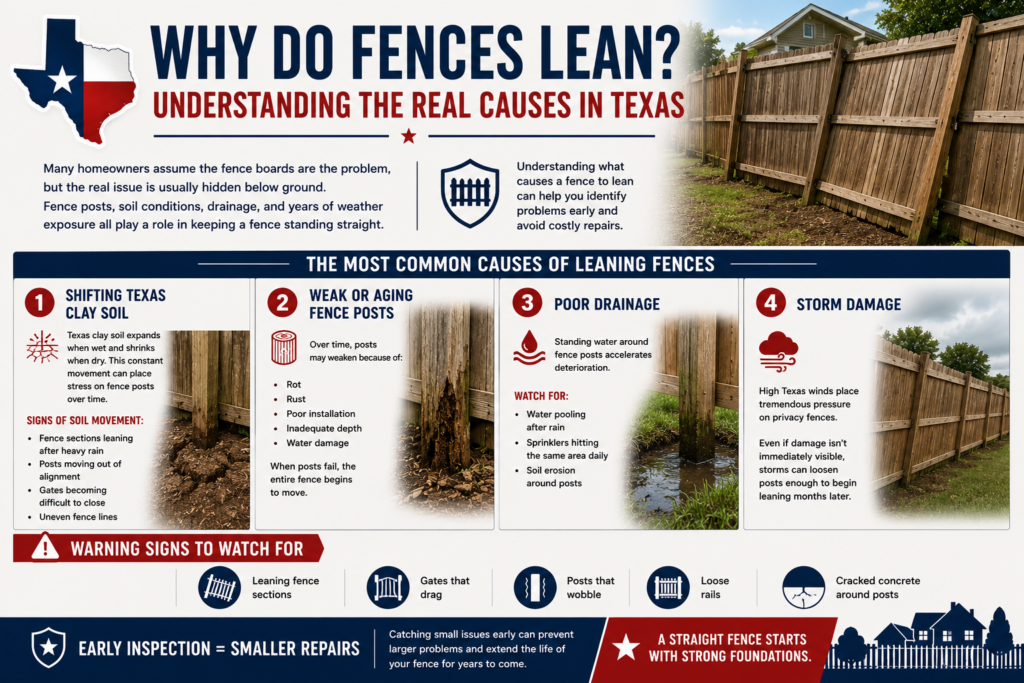
Many people assume the fence boards are the problem, but the real issue is usually hidden below ground. Fence posts, soil conditions, drainage, and years of weather exposure all play a role in keeping a fence standing straight.
Understanding what causes a fence to lean can help you identify problems early and avoid more expensive repairs.
The Most Common Causes of Leaning Fences
1. Shifting Texas Clay Soil
Texas is known for expansive clay soils that swell when wet and shrink when dry. This constant movement can place stress on fence posts over time.
Signs of soil movement include:
- Fence sections leaning after heavy rain
- Posts moving out of alignment
- Gates becoming difficult to close
- Uneven fence lines
2. Weak or Aging Fence Posts
Fence posts provide the structural support for the entire fence.
Over time, posts may weaken because of:
- Rot
- Rust
- Poor installation
- Inadequate depth
- Water damage
When posts fail, the entire fence begins to move.
3. Poor Drainage
Standing water around fence posts accelerates deterioration.
Watch for:
- Water pooling after rain
- Sprinklers hitting the same area daily
- Soil erosion around posts
4. Storm Damage
High Texas winds place tremendous pressure on privacy fences.
Even if damage isn’t immediately visible, storms can loosen posts enough to begin leaning months later.
Warning Signs to Watch For
- Leaning fence sections
- Gates that drag
- Posts that wobble
- Loose rails
- Cracked concrete around posts
Can a Leaning Fence Be Repaired?
Sometimes.
If the problem is isolated and most of the fence remains structurally sound, repair may be possible.
However, widespread post failure may make replacement the better long-term solution.
Final Thoughts
Small amounts of movement can quickly become larger structural problems. Regular inspections help homeowners identify issues before extensive repairs become necessary.