
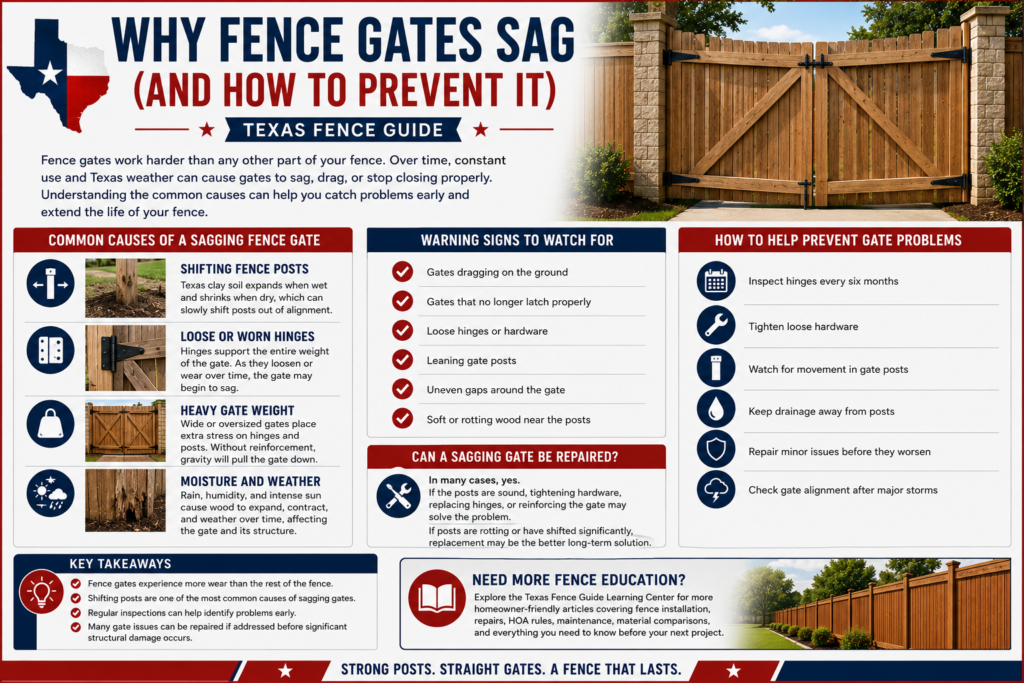
Fence gates work harder than any other part of your fence. Unlike fence panels that stay in place, gates are opened and closed every day while supporting their own weight. Over time, this constant movement—combined with Texas weather—can cause gates to sag, drag, or stop closing properly.
Fortunately, understanding the common causes can help you catch problems early and extend the life of your fence.
Common Causes of a Sagging Fence Gate
Shifting Fence Posts
The most common cause of a sagging gate is movement in the gate posts. Texas clay soil expands when wet and shrinks when dry, which can slowly shift posts out of alignment.
Loose or Worn Hinges
Hinges support the entire weight of the gate. As they loosen or wear over time, the gate may begin to sag or become difficult to latch.
Heavy Gate Weight
Wide or oversized gates place additional stress on the hinges and supporting posts. Without proper reinforcement, gravity will gradually pull the gate downward.
Moisture and Weather
Rain, humidity, and intense Texas sun cause wood to expand, contract, and weather over time. These natural changes can affect both the gate and its supporting structure.
Warning Signs to Watch For
A few simple inspections can help identify problems before they become major repairs.
Look for:
- Gates dragging on the ground
- Gates that no longer latch properly
- Loose hinges or hardware
- Leaning gate posts
- Uneven gaps around the gate
- Soft or rotting wood near the posts
Can a Sagging Gate Be Repaired?
In many cases, yes.
If the posts remain structurally sound, tightening hardware, replacing hinges, or reinforcing the gate may solve the problem.
However, if the posts have shifted significantly, are rotting, or no longer provide adequate support, replacing the affected components may be the better long-term solution.
How to Help Prevent Gate Problems
Regular maintenance can go a long way toward extending the life of your gate.
We recommend:
- Inspecting hinges every six months
- Tightening loose hardware
- Watching for movement in gate posts
- Keeping drainage away from posts
- Repairing minor issues before they worsen
- Checking gate alignment after major storms
A few minutes of maintenance each season can help prevent much larger repairs later.
Key Takeaways
- Fence gates experience more wear than the rest of the fence.
- Shifting posts are one of the most common causes of sagging gates.
- Regular inspections can help identify problems early.
- Many gate issues can be repaired if addressed before significant structural damage occurs.
Need More Fence Education?
Explore the Texas Fence Guide Learning Center for more homeowner-friendly articles covering fence installation, repairs, HOA rules, maintenance, material comparisons, and everything you need to know before your next fence project.