
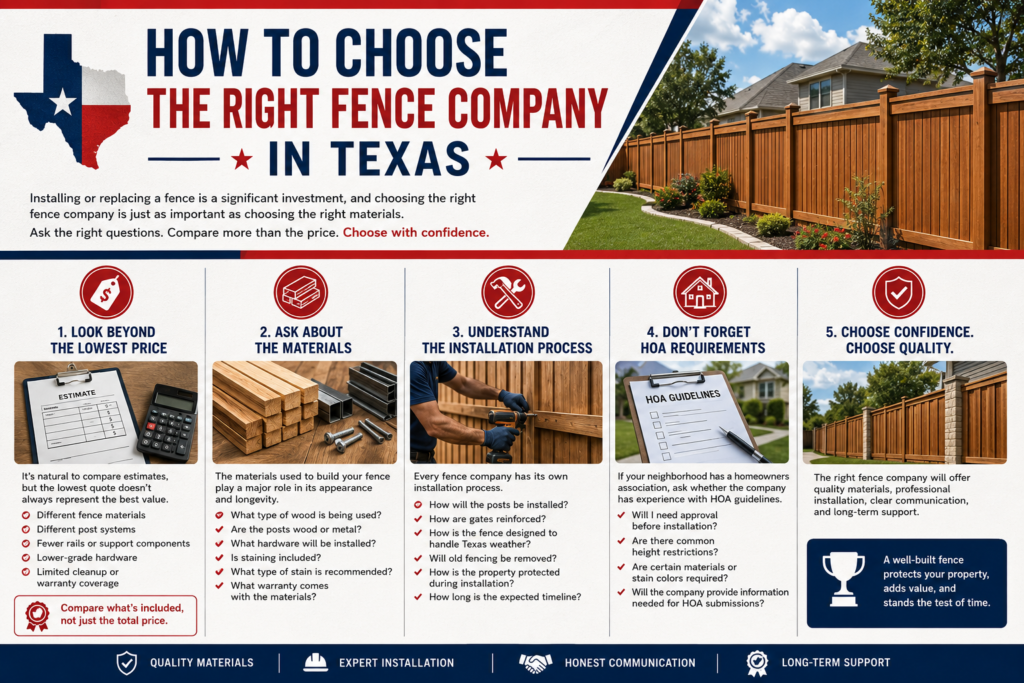
Installing or replacing a fence is a significant investment, and choosing the right fence company is just as important as choosing the right materials.
While price is certainly a factor, it shouldn’t be the only thing you compare. Two companies may offer similar-looking quotes but use different materials, installation methods, or construction practices that can affect how your fence performs over time.
Knowing what questions to ask can help you feel more confident before making a decision.
Look Beyond the Lowest Price
It’s natural to compare estimates, but the lowest quote doesn’t always represent the best value.
A lower price may reflect differences such as:
- Different fence materials
- Different post systems
- Fewer rails or support components
- Lower-grade hardware
- Limited cleanup or warranty coverage
Instead of comparing only the total price, compare what is actually included in each proposal.
Ask About the Materials
The materials used to build your fence play a major role in its appearance and longevity.
Consider asking questions like:
- What type of wood is being used?
- Are the posts wood or metal?
- What hardware will be installed?
- Is staining included?
- What type of stain is recommended?
- What warranty comes with the materials?
Understanding the materials helps you make a more informed comparison between estimates.
Understand the Installation Process
Every fence company has its own installation process.
Ask questions such as:
- How will the posts be installed?
- How are gates reinforced?
- How is the fence designed to handle Texas weather?
- Will old fencing be removed?
- How is the property protected during installation?
- How long is the expected timeline?
A company that clearly explains its process often helps homeowners better understand what to expect.
Don’t Forget HOA Requirements
If your neighborhood has a homeowners association, ask whether the company has experience working with HOA guidelines.
Helpful questions include:
- Will I need approval before installation?
- Are there common height restrictions?
- Are certain materials or stain colors required?
- Will the company provide information needed for HOA submissions?
Planning ahead may help prevent unnecessary delays.
Review the Warranty
Before signing a contract, understand what is covered after the project is complete.
Ask about:
- Material warranties
- Workmanship warranties
- Gate adjustments
- Hardware issues
- Repair procedures if problems arise
A clear warranty helps set expectations for both the homeowner and the contractor.
Read Reviews and View Previous Projects
One of the best ways to evaluate a fence company is by reviewing examples of previous work.
Look for:
- Before-and-after project photos
- Online reviews
- Customer testimonials
- Project walkthroughs
- Examples of different fence styles
These resources can provide insight into the company’s experience and attention to detail.
Questions to Ask Before Hiring
Bring this checklist with you when requesting estimates:
- What materials do you recommend for my property?
- What type of fence posts do you use?
- Is staining included?
- What warranty is provided?
- How long will the project take?
- How will gates be built?
- Will you remove the old fence?
- Are permits or HOA approvals required?
- What maintenance should I expect after installation?
The answers can help you compare companies on more than price alone.
Key Takeaways
- Compare what is included in each estimate—not just the total cost.
- Ask questions about materials, posts, gates, and installation methods.
- Understand warranty coverage before making a decision.
- Review previous projects and customer feedback.
- If your neighborhood has an HOA, confirm any approval requirements before construction begins.
Need More Fence Education?
The Texas Fence Guide Learning Center is designed to help Texas homeowners make informed decisions before installing, repairing, or replacing a fence. Explore our growing collection of educational articles, comparison guides, maintenance resources, and project planning tools to help you choose the right fence—and the right approach—for your home.