
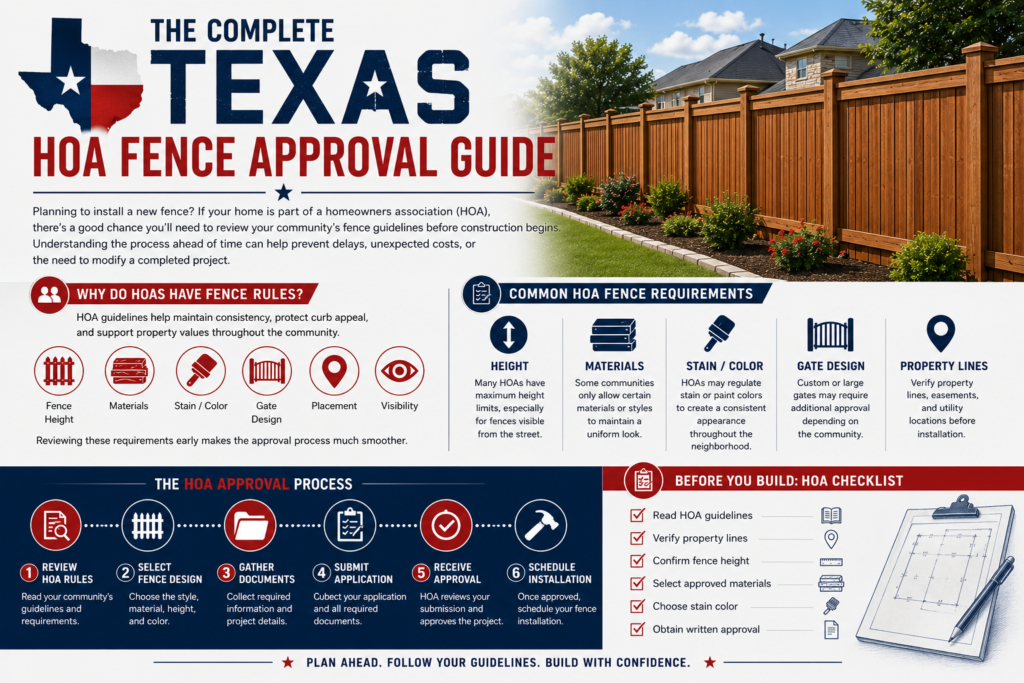
Planning to install a new fence? If your home is part of a homeowners association (HOA), there’s a good chance you’ll need to review your community’s fence guidelines before construction begins.
While every HOA has its own rules, many Texas neighborhoods regulate fence height, materials, stain colors, gate styles, and placement to help maintain a consistent appearance throughout the community.
Taking a little time to understand the approval process can help prevent delays, unexpected costs, or the need to modify a completed project.
Why Do HOAs Have Fence Rules?
Most HOAs establish fence guidelines to create consistency throughout the neighborhood while helping preserve curb appeal and property values.
Depending on your community, HOA rules may address:
- Fence height
- Fence style
- Approved materials
- Stain or paint colors
- Gate design
- Fence placement
- Visibility at street corners
Understanding these requirements before starting your project can make the approval process much smoother.
Common HOA Fence Requirements
Although every community is different, many Texas HOAs review similar items before approving a fence project.
Fence Height
Many neighborhoods have maximum height limits, especially for fences visible from the street.
Rear-yard privacy fences often have different requirements than front-yard or side-yard fencing.
Fence Materials
Some communities only allow certain fence materials or specific styles to maintain a uniform neighborhood appearance.
Examples may include:
- Cedar privacy fences
- Decorative metal fencing
- Board-on-board designs
- Horizontal fencing (if permitted)
Stain and Color
Some HOAs regulate stain colors to create a consistent look throughout the neighborhood.
Before staining a new fence, check whether your HOA has approved color requirements.
Gate Design
Large driveway gates, decorative gates, or custom gate styles may require additional approval depending on the neighborhood.
Don’t Forget Property Lines
Before installing a fence, it’s important to understand where your property begins and ends.
Many homeowners choose to review:
- Existing surveys
- Property markers
- Easements
- Utility locations
Building in the wrong location can create unnecessary disputes and additional expenses.
What Information May Be Required?
Some HOAs ask homeowners to submit basic project information before approving construction.
This may include:
- A site plan or survey
- Fence location
- Fence height
- Material selection
- Stain color
- Photos or drawings
- Product specifications
Every HOA has its own application process, so always review your community’s requirements.
Common HOA Mistakes to Avoid
Many fence approval delays happen because homeowners simply overlook a few important steps.
Common mistakes include:
- Starting construction before receiving approval
- Assuming a neighbor’s fence meets current HOA standards
- Choosing unapproved materials or colors
- Installing the wrong fence height
- Forgetting to review property lines
- Making design changes after approval without notifying the HOA
A little planning upfront can save significant time later.
Questions to Ask Before Installing a Fence
Before beginning your project, consider asking:
- Does my HOA require fence approval?
- Are there height restrictions?
- Which materials are approved?
- Are there approved stain colors?
- Will I need a property survey?
- Are there rules for gates or corner lots?
- How long does the approval process typically take?
Having these answers before requesting estimates can make planning much easier.
Key Takeaways
- Many Texas HOAs require fence approval before construction begins.
- Fence height, materials, colors, and placement are common review items.
- Property lines and surveys should be verified before installation.
- Review your HOA guidelines early to help avoid project delays.
- Every HOA is different, so always follow your community’s governing documents.
Need More Fence Education?
The Texas Fence Guide Learning Center provides educational resources to help Texas homeowners better understand fence installation, repairs, HOA guidelines, material comparisons, maintenance, and project planning. Explore our growing collection of articles to make informed decisions before your next fence project.
| Ideas for graphics to make the page look better |
Graphic Ideas for This Article
To make this page more engaging and valuable than a typical contractor blog, I recommend including:
- HOA Approval Timeline
- Review HOA Rules
- Select Fence Design
- Gather Required Documents
- Submit Application
- Receive Approval
- Schedule Installation
- “Before You Build” Checklist
- Read HOA guidelines
- Verify property lines
- Confirm fence height
- Select approved materials
- Choose stain color
- Obtain written approval