
Texas Fence Blog

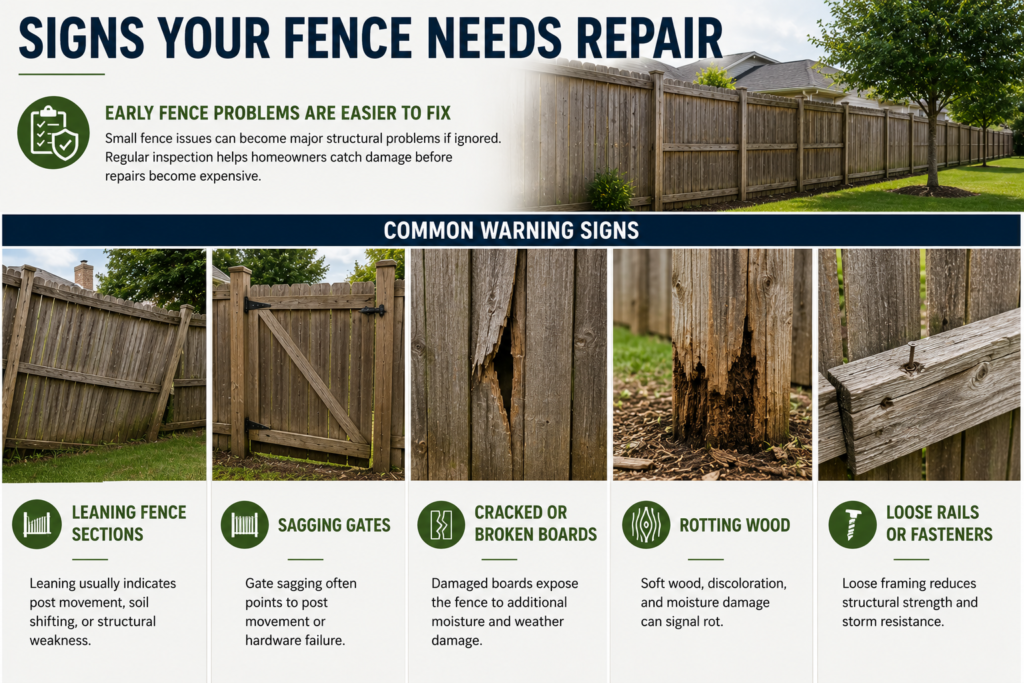
Signs Your Fence Needs Repair

Early Fence Problems Are Easier to Fix

Small fence issues can become major structural problems if ignored. Regular inspection helps homeowners catch damage before repairs become expensive.

Common Warning Signs

Leaning Fence Sections

Leaning usually indicates post movement, soil shifting, or structural weakness.

Sagging Gates

Gate sagging often points to post movement or hardware failure.

Cracked or Broken Boards

Damaged boards expose the fence to additional moisture and weather damage.

Rotting Wood

Soft wood, discoloration, and moisture damage can signal rot.

Loose Rails or Fasteners

Loose framing reduces structural strength and storm resistance.

When Repairs May Not Be Enough

If multiple posts are failing or rot is widespread, replacement may make more sense than ongoing repairs.

Final Thoughts

Routine inspections can help homeowners protect fence lifespan and avoid larger structural failures.

Start Learning

Browse Fence Education Topics

Choose the category that best matches your question or project stage.

1

Installation

Learn how fences are built, what posts do, how gates should be framed, and what makes a fence last.

2

Repairs

Diagnose leaning fences, broken posts, rot, gate problems, and storm damage before deciding what to do next.

3

HOA & Property Lines

Understand approvals, surveys, height restrictions, neighbor disputes, and common HOA mistakes.

4

Wood & Stain

Compare cedar, pine, stain systems, color options, UV protection, and maintenance schedules.

5

Comparisons

Compare wood vs vinyl, metal vs wood posts, horizontal vs vertical, and repair vs replacement.

6

Texas Weather

Learn how heat, hail, moisture, high winds, and shifting soil affect fence lifespan.

Have a Fence Question?

Learn First. Build Smarter.

Whether you are comparing materials, dealing with storm damage, reviewing HOA rules, or planning a new fence, the Texas Fence Learning Center is built to help you make a more confident decision.