
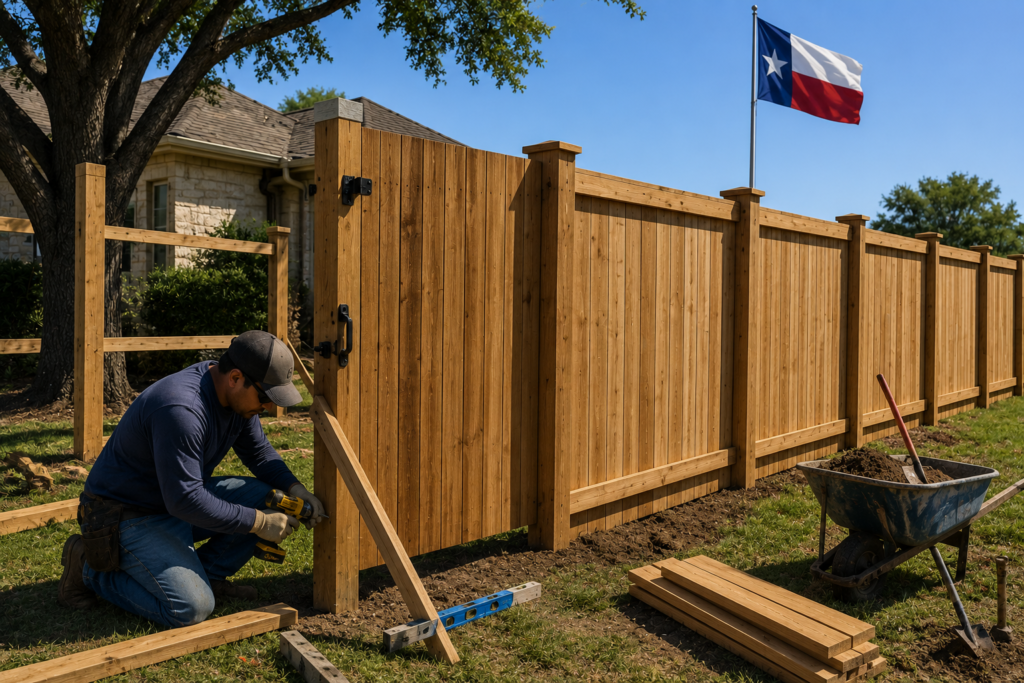
Why Fence Installation Matters
A fence is only as strong as the way it is built. In Texas, fences face extreme heat, heavy storms, shifting clay soil, moisture, and high winds. Poor installation can lead to leaning sections, sagging gates, rotting posts, and expensive repairs.
Fence Installation Best Practices
Use Proper Post Depth
Fence posts should be set deep enough to handle Texas wind and soil movement. Shallow posts are one of the most common causes of leaning fences.
Focus on Drainage
Standing water around posts can accelerate rot and structural failure. Proper drainage helps extend fence lifespan.
Reinforce Gates
Fence gates carry more weight and movement than standard sections. Strong framing and heavy-duty hardware help prevent sagging.
Choose Quality Materials
Wood quality, fasteners, stain systems, and post material all affect long-term durability.
Protect the Fence With Stain
UV exposure and moisture are major threats in Texas. Fence stain helps protect wood from cracking, fading, and rot.
Common Fence Installation Mistakes
- Shallow posts
- Poor gate framing
- Weak fasteners
- No stain protection
- Improper spacing
- Cheap materials
Final Thoughts
A properly installed fence can last significantly longer and require fewer repairs over time. Homeowners should focus on structure, drainage, and material quality — not just appearance.